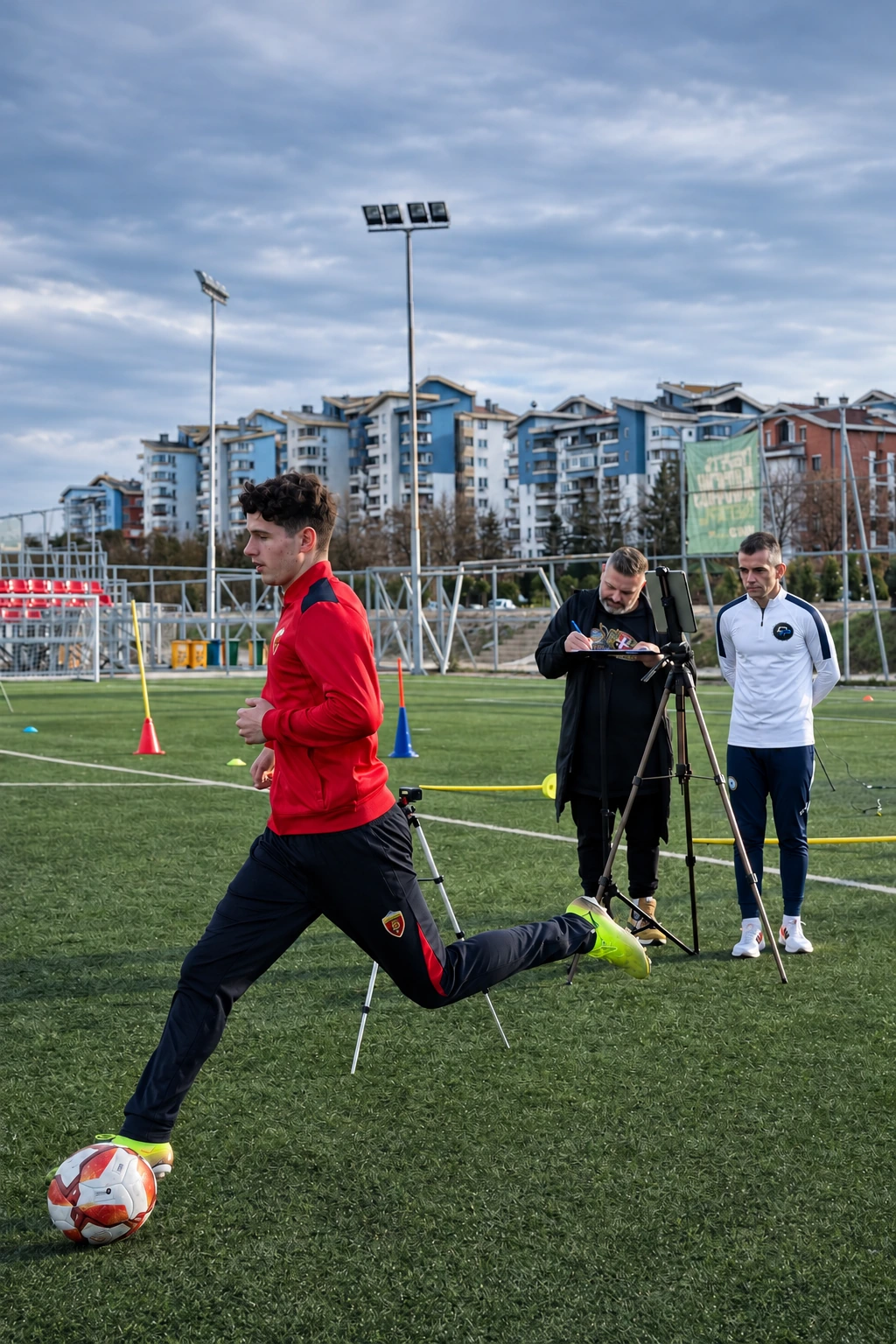
04 / Control & feedback
- 01Potential diagnosticsBase card
- 02Prognostics & modelingStrategy
- 03Program delivery & executionOn-field action
- 04Control & feedbackMonitoring
- 05Effect valuation & evaluationFinal rating
While the program runs, we continuously track how the athlete responds to prescribed load. This phase acts as a constant feedback loop between what happens on the field and data collected in real time.
Monitoring makes deviations visible immediately — whether slowed progress, excessive fatigue, or early imbalance signs — instead of waiting until the end of a cycle to notice the problem.
Based on this feedback, the program is adjusted on the fly. This is the phase that keeps the strategy relevant and effective throughout the work period, not only on paper at the moment it was defined.